
 Digital Learning House “Jewish Life” – Concept
Brief description
With the digital learning centre “Jewish Life”, a sustainable learning offer is being created together with students and in interdisciplinary cooperation (didactics of Protestant religion, Protestant theology, didactics of history, school pedagogy), which – in addition to the usual emphasis on the history of suffering of Jews – focuses on the development of Jewish life in its cultural value and its diverse liveliness in Germany in the past and present. This is also intended to make an important contribution to the prevention of anti-Semitism.
 The initial problems lie both in terms of content and methodology: Jewish life and anti-Semitism are consistently underrepresented in school and university teaching.
Teachers and pupils have little knowledge of Jewish history and culture or of contemporary Jewish life in Germany (Salzborn & Kurth, Antisemitismus in der Schule, 2019). Furthermore, schools in particular are a focal point for anti-Semitic statements (Bernstein, Antisemitismus an Schulen in Deutschland, 2020, Unabhängiger Expertenkreis Anti-Semitism, 2017). In general, anti-Semitism is on the rise again in Germany. Antisemitic acts of violence are on the rise (FES, Verlorene Mitte, 2020). The echo chambers of the internet and public statements by right-wing parties serve as ideological amplifiers. The causes are manifold. However, one of them is likely to be that for many people, their “knowledge” about Judaism is fuelled by the media and deep-seated prejudices and resentments circulating online and offline, while only a few people have personal encounters with Jews. This is also due to the fact that there is only a relatively small Jewish minority in Germany (estimates range from 150,000 to 250,000 people). Added to this are stereotypical attitudes, some of which are characterised by centuries-old anti-Jewish images.
The media presence of Judaism in Germany is also largely dominated by the – important and still necessary – discussion of the Shoah and anti-Jewish European history. In contrast, the perception of the valuable cultural contributions of Judaism in the past and present as well as the diverse vitality of Judaism currently lived in Germany is given far too little attention (www.kmk-zentralratderjuden.de/gemeinsame-erklaerung).
The “Digital Learning Centre ‘Jewish Life'” aims to use a variety of digital possibilities to
a) present the aforementioned cultural contributions and basic information on religious Judaism
b) to explore current Jewish life in Germany from an experiential perspective, and
c) to identify and combat anti-Semitism in its various forms.
A core idea of the project in the university sector is the digital support of existing courses from various fields of study in cross-pillar cooperation (specialised didactics, subject sciences, pedagogy, school pedagogy) and supplementation. The cooperation with non-university and, above all, Jewish partners, including a growing amount of digital material on Jewish life, is also intended to highlight the diversity of Jewish self-understandings. The research orientation of teaching will be strengthened through research-based learning (Basten/Mertens/Schöning/Wolf, Forschendes Lernen in der Lehrer/innenbildung, 2020; Pirner/Rothgangel, Empirisch forschen in der Religionspädagogik. Ein Studienbuch für Studierende und Lehrkräfte, 2018; Bolland, Forschendes und biographisches Lernen in der Lehrerausbildung, 2011) with the help of digital formats (Kergel/Heidkamp, Forschendes Lernen mit digitalen Medien, 2015).
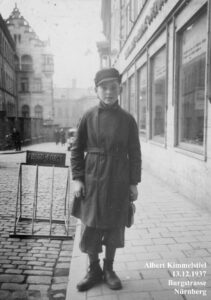
 One example of this is the establishment of a digital archive in which students process previously unrecorded rural Jewish archive holdings relating to the Medina Oschfah (former rabbinate of Schnaittach) (cataloguing, transcription, cataloguing, indexing, educational use); at the same time, the materials can serve as a resource for further historical and/or educational work (Switalski, Schalom Melanchton, 2016).
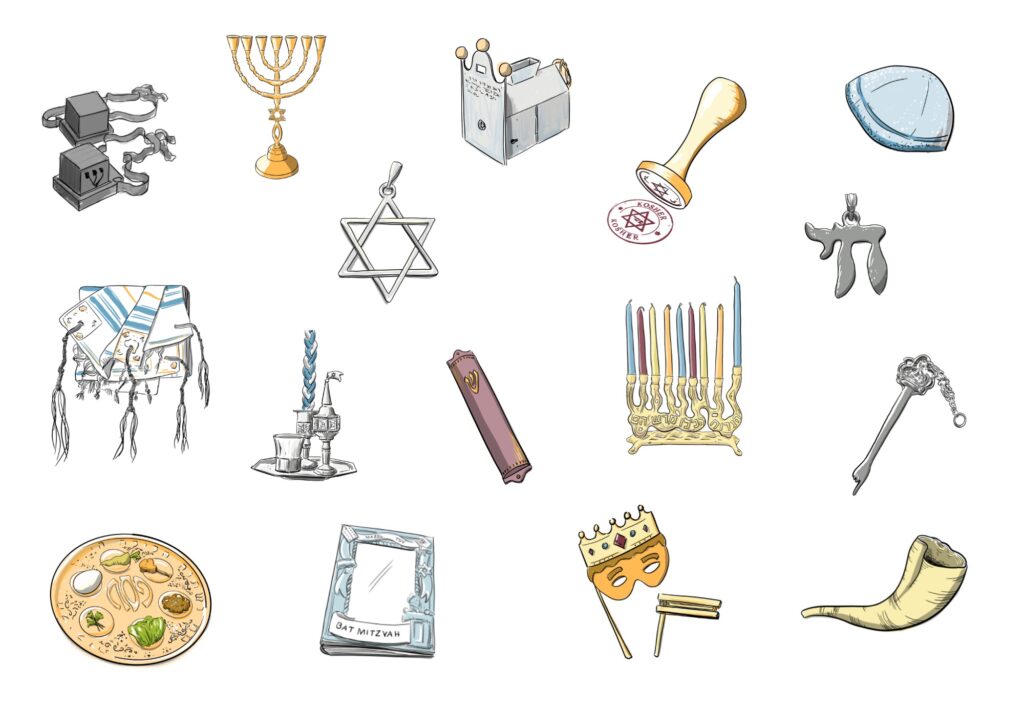
In the field of religious didactics, a presentation of religious Jewish artefacts (Haußmann, Lernen mit religiösen Artefakten, 2008) should open up a wide range of opportunities for interreligious learning (ethnographic research into religious backgrounds and contexts of use). At the same time, digital formats can be used to open up opportunities for interaction that take the existing “objects” as a starting point for interreligious dialogues between different target groups.
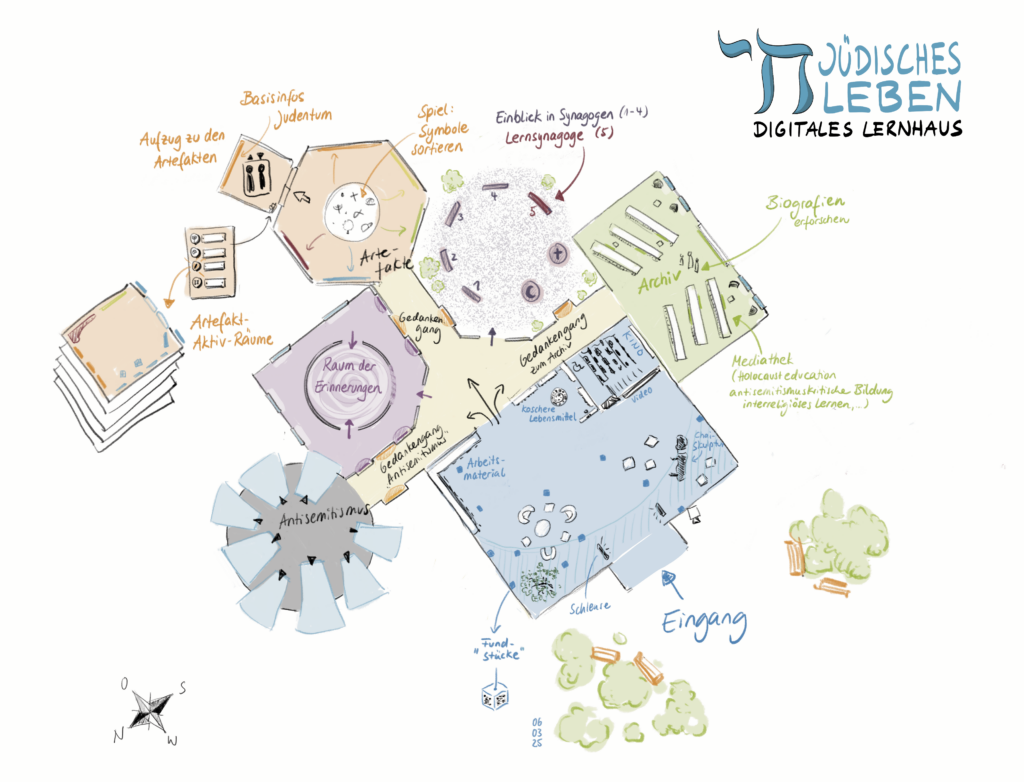
Various manifestations of anti-Semitism are represented in a rotunda by images that can be explored using stimuli. You ‘enter’ the respective room through the opening images in order to further penetrate the complex of topics of this one manifestation of anti-Semitism and to develop it according to a certain pattern (explore manifestations – gain an overview – take a closer look – understand better – find ways out).
In addition, a synagogue learning area is being developed, as well as a “Room of Remembrance”.
In addition to the area of university teaching (but also adult education), the focus is also on the school sector (primary and secondary level), so that the digital learning centre “Jewish Life” is designed on three levels, so to speak: children – young people – adults.
Pupils can move freely in the virtual rooms (drawn by Britta Wagner in graphic novel style) and work independently with the materials provided (inside perspective – outside perspective).
Each artefact (e.g. Bar/Bat Mitzvah album, Chanukiah, Havdalah set, Menorah, Purim masks, Seder plate, Tallit, Tefillin) has its own activity room, which constitutes a separate learning environment.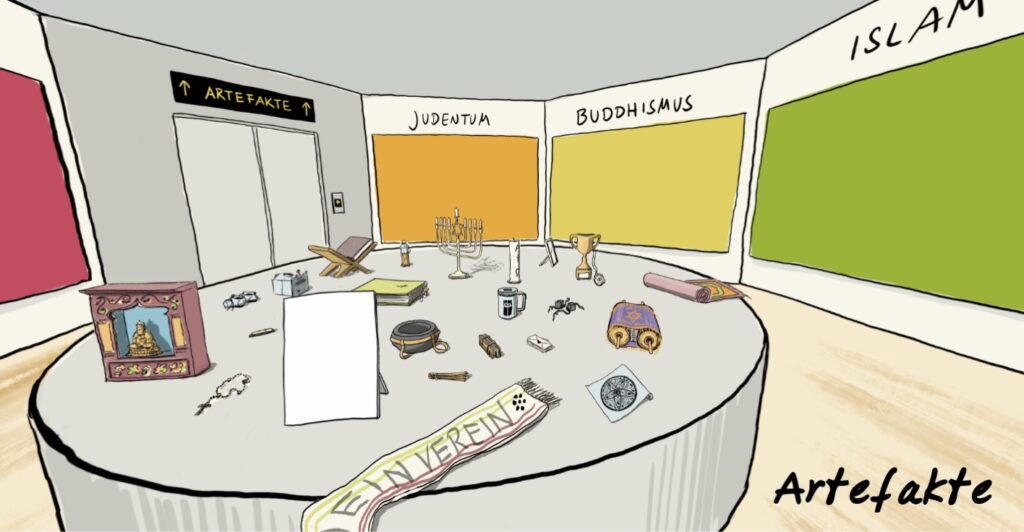
The activity area provides a range of tasks (differentiated by level) that can be worked on using the materials provided.
Before engaging specifically with Jewish artefacts, visitors are introduced to the world of artefacts through a game, designed to show that Judaism is not somehow “strange” or “other.”
In the digital archive, the biographies of Jewish individuals can be reconstructed using a range of historical sources; each biography is introduced through a particular event or episode of special significance.
Students have the opportunity to develop skills in working with historical sources: processing archival collections, cataloguing records, transcription, indexing, research, presentation, and more.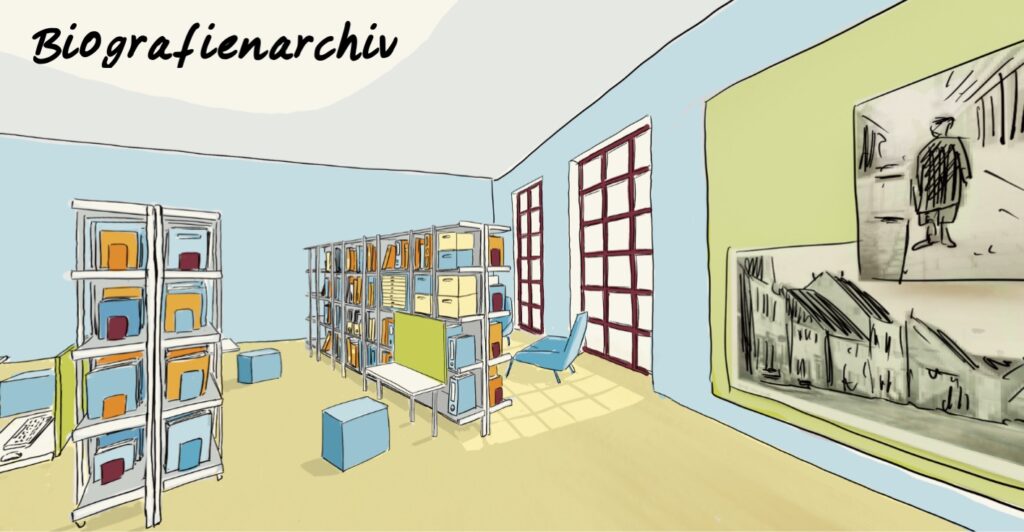
The archive is also home to an extensive library and media collection.
For young people and adults, various manifestations of antisemitism are represented in a rotunda through images, which are to be explored — guided by prompts — according to a specific pattern. By passing through the entry images, users “enter” the respective room in order to engage more deeply with the thematic complex of that particular form of antisemitism.
Newly developed modules enable independent engagement, with the aim of encouraging users to develop their own position and to devise strategies against antisemitism.
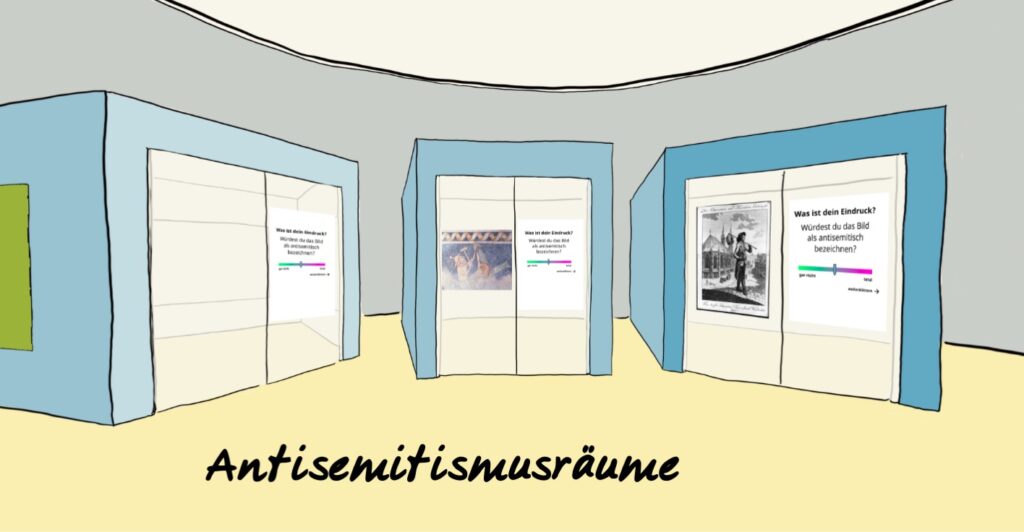 The individual thematic rooms are:
- Christian Anti-Judaism
- Racial Antisemitism (National Socialism)
- Post-Shoah Antisemitism
- Israel-related Antisemitism
- Political Antisemitism and Conspiracy Myths
- Antisemitic Othering
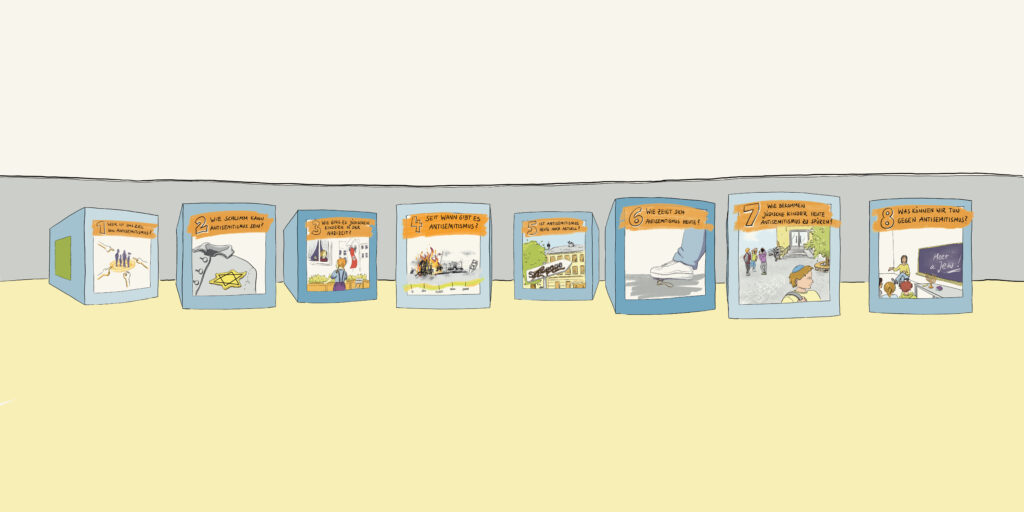
For children, a different learning pathway is provided. In the rotunda, eight thematic fields are offered in a sequential, scaffolded structure:
Who is targeted by antisemitism?
How serious can antisemitism be?
What was life like for Jewish children during the Nazi era?
How far back does antisemitism go?
Is antisemitism still relevant today?
How does antisemitism manifest itself today?
How do Jewish children today experience antisemitism?
What can we do against antisemitism?
A preview can be found here: https://britta-wagner.de/lernbereich-antisemitismus-kinder.
“The synagogue is the beating heart of Judaism.” It can thus be said that synagogues play a particularly important role in the religious, social, and cultural life of the Jewish community. They are not only a place of prayer and worship, but also of education, gathering, and learning.
The “Synagogue” learning space allows key aspects of Jewish identity (e.g. worship, Torah, Eternal Light, Bar/Bat Mitzvah, community and congregational life) to be explored in a spatial and experience-based way that is particularly conducive to understanding.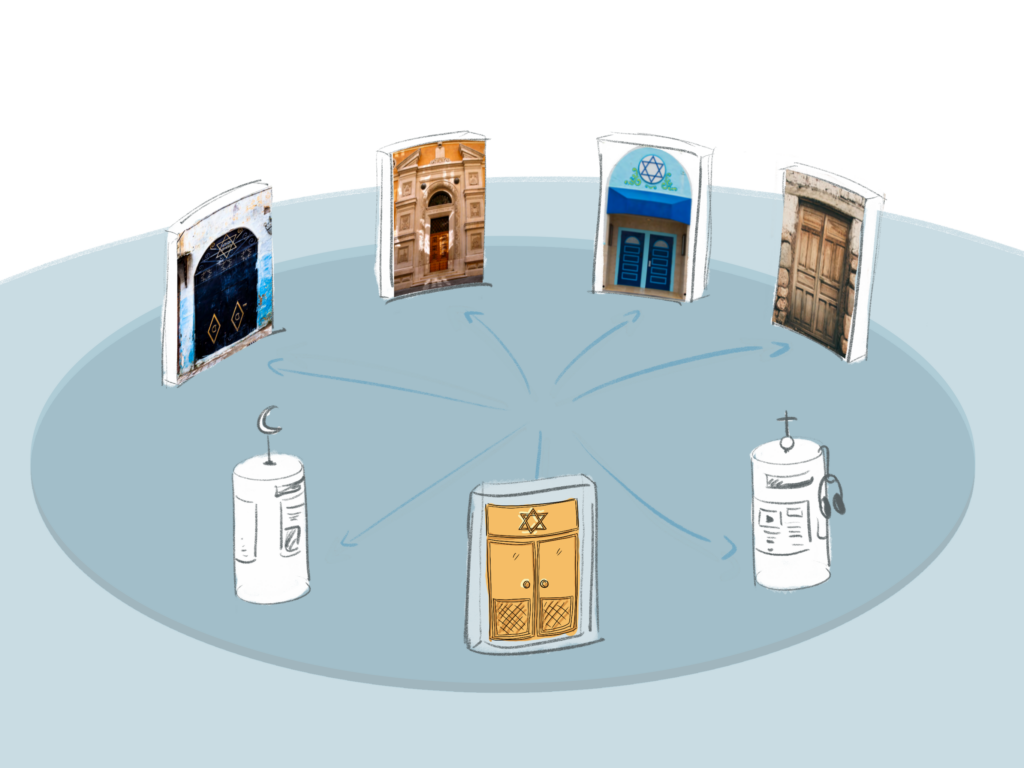
Initial ideas therefore envisage a “breaking” of (virtual) reality: on an imaginary agora, visitors can step through freestanding synagogue doors into virtual 3D synagogues and explore them — with or without guidance. The underlying idea is that no single synagogue can stand, as it were, as pars pro toto for all others; rather, this area too makes visible the diversity that runs through Jewish life. In addition, a door drawn in the graphic novel style of the Learning House opens access to a synagogue rendered in the same typified format, where visitors can interact with the environment — just as they are accustomed to from the other areas of the Learning House.
In order to open up interreligious perspectives, connections to the mosque and the church are established after the visit to the “Learning House Synagogue” through interactive surfaces (represented in the image as columns).
“Memory is the secret source of greatness and wisdom.” (Rabbi Abraham Joshua Heschel)
It is not only religious Judaism that continually cultivates the memory of its covenant with God and gives it presence in manifold ways — Christianity, too, lives from tradition and transmission. In the case of Judaism, however, this is intertwined with elements of secular history and the devastating catastrophe of the Shoah.
A learning house devoted to Jewish life must include a space for “dark” memories (the Shoah, persecution, and more). Yet it would fall short — theologically and didactically — to focus exclusively on the history of Jewish suffering, as is so often the case elsewhere. In this room, “bright” memories are also given their rightful place: biographical portraits, examples of successful coexistence, dialogue initiatives, reconciliation projects, and more.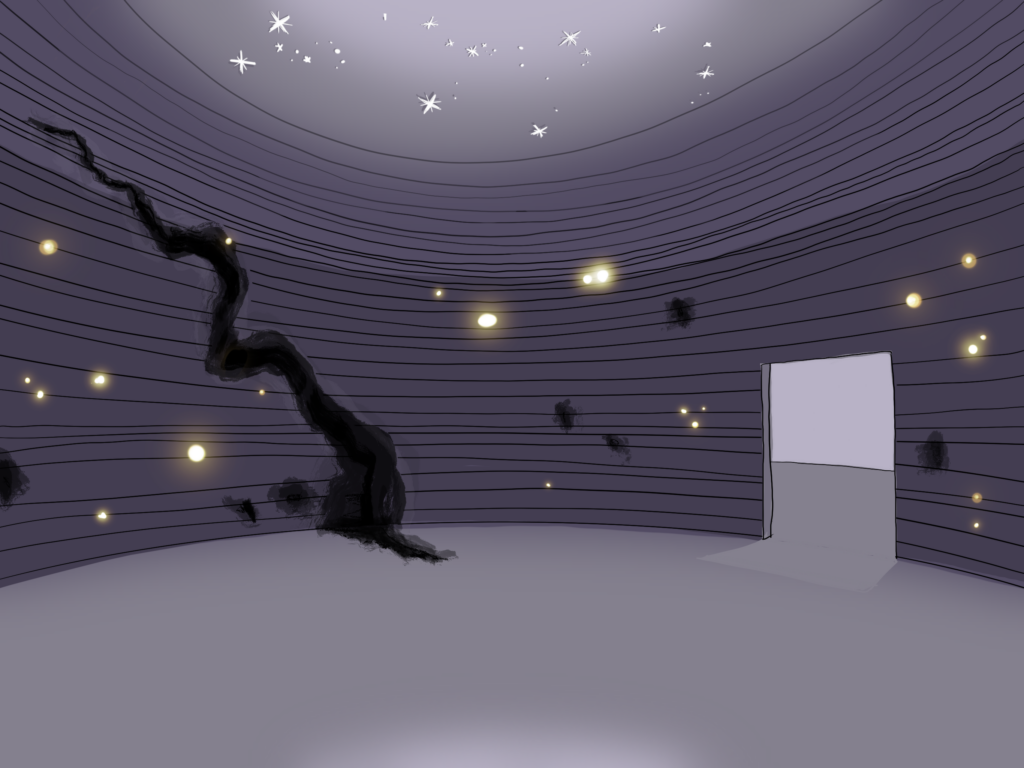
The plan is for an atmospherically dense, circular room in which light and dark points represent memories that can be “entered” through guiding prompts. At the same time, any simplistic black-and-white thinking is deliberately counteracted. The Shoah is given particular graphic prominence within this space.
Poster Digitales-Lernhaus-Jüdisches Leben
Flyer Digitales-Lernhaus-Jüdisches Leben
The project “Digital Learning House ‘Jewish Life'” is being developed in cooperation with Jewish partners, BCJ.Bayern e.V., the Society for Social Sciences and Future Studies Munich (GIM), and the European Janusz Korczak Academy. It receives substantial funding from the Protestant Church in Bavaria and the Protestant Church in Germany (EKD), as well as from the University Association of FAU, the Bavarian Teachers’ Association (BLLV), and RUPRE, along with the Manfred Roth Foundation, the Dr. German Schweiger Foundation, the Barbara-Schadeberg-Stiftung, and WirWunder of Stadtsparkasse Nürnberg.